Only essential cookies required for basic site functionality are used.
Carbohydrates: Fueling the Body
Understanding the structure, types, and importance of carbohydrates in human nutrition.
What Are Carbohydrates?
Carbohydrates are organic compounds composed of carbon, hydrogen, and oxygen that serve as the body's primary source of energy. They are classified based on their molecular structure, ranging from simple sugars to complex polysaccharides.
The brain relies heavily on carbohydrates for fuel, and muscles use carbohydrate stores (glycogen) during physical activity. Understanding different types of carbohydrates helps contextualize their roles in nutrition and health.
Functions of Carbohydrates
- Providing immediate energy through glucose metabolism
- Storing energy as glycogen in muscles and liver
- Fueling brain and nervous system function
- Supporting physical performance and endurance
- Contributing to digestive health through fiber
- Providing structural components in cells
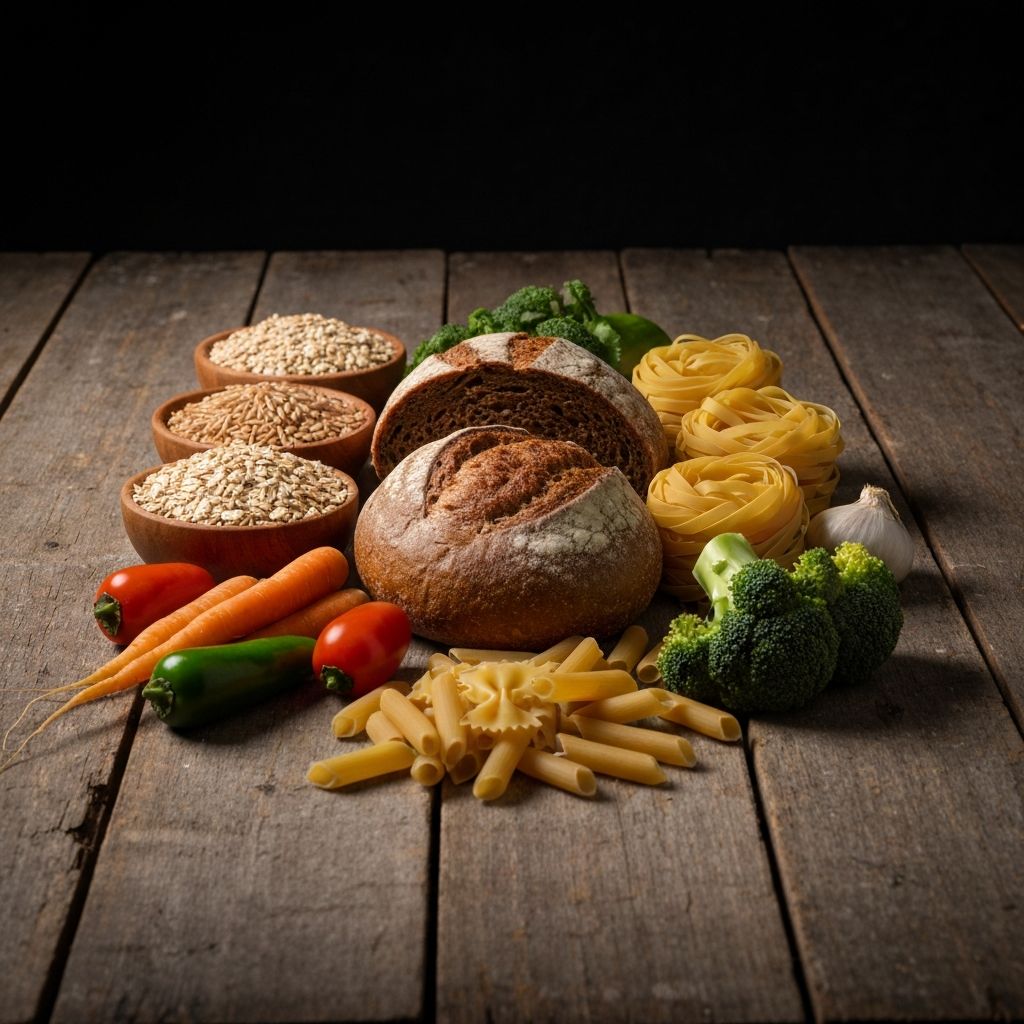
Classification of Carbohydrates
Carbohydrates are typically classified into three main categories based on their chemical structure and complexity.
Monosaccharides (Simple Sugars)
Single sugar molecules that are rapidly absorbed and used for immediate energy. Common examples include glucose, fructose, and galactose. These are found naturally in fruits, honey, and milk.
Disaccharides
Two monosaccharides bonded together. Examples include sucrose (table sugar), lactose (milk sugar), and maltose (malt sugar). These are broken down into monosaccharides during digestion.
Polysaccharides (Complex Carbohydrates)
Long chains of glucose molecules that require more digestion time than simple sugars. These include starches (in grains and vegetables) and fiber (in plant foods). Complex carbohydrates provide more sustained energy.
Simple vs. Complex Carbohydrates
The distinction between simple and complex carbohydrates is based on their structure and how quickly they are metabolized.
Simple Carbohydrates
Quickly broken down and absorbed, causing rapid increases in blood glucose. Often found in refined foods and natural sources like fruit.
Sources: White sugar, candy, white bread, fruits, honey, milk.
Complex Carbohydrates
Slowly digested due to their structure, providing more sustained energy and often containing fiber. Generally associated with better nutritional profiles.
Sources: Whole grains, oats, brown rice, legumes, vegetables.
Dietary Fiber
A type of carbohydrate that the human body cannot digest. Despite not providing energy, fiber is essential for digestive health and other bodily functions.
Sources: Whole grains, vegetables, fruits, legumes, nuts.
Glycemic Index and Glycemic Load

Understanding Glycemic Response
Glycemic Index (GI): Measures how quickly a carbohydrate-containing food raises blood glucose levels compared to pure glucose. Lower GI foods are absorbed more slowly and cause more gradual increases in blood sugar.
Glycemic Load (GL): Takes into account both the glycemic index and the amount of carbohydrate in a serving. This provides a more practical measure of how a food portion affects blood glucose.
"Understanding the glycemic response to foods can be useful for personal nutrition decisions, though other nutritional factors also matter significantly."
Practical Considerations
- Combining carbohydrates with protein or fat slows absorption
- Processing affects glycemic response (whole grain vs. refined grain)
- Individual responses vary based on metabolism and other factors
- Both immediate and long-term patterns matter for health
Carbohydrate Digestion and Metabolism
Understanding how the body processes carbohydrates provides insight into their energy role and how different types affect blood glucose.
The Digestive and Metabolic Process
- Mouth: Saliva begins breaking down complex carbohydrates through enzyme action
- Stomach: Mechanical digestion continues; little chemical breakdown
- Small intestine: Further enzymatic breakdown; glucose and other monosaccharides are absorbed
- Absorption: Monosaccharides cross intestinal walls into bloodstream
- Glucose transport: Insulin facilitates glucose uptake by cells
- Energy production: Cells use glucose through aerobic and anaerobic respiration
- Storage: Excess glucose is stored as glycogen or converted to fat
Sources of Carbohydrates
Carbohydrates come from a wide variety of plant-based foods. Different sources provide different ratios of simple sugars, complex carbohydrates, and fiber.
| Food Category | Examples | Carbohydrate Type |
|---|---|---|
| Grains | Oats, brown rice, whole wheat bread, quinoa | Complex carbohydrates with fiber |
| Vegetables | Broccoli, carrots, sweet potatoes, leafy greens | Complex with fiber and micronutrients |
| Fruits | Apples, berries, bananas, oranges | Natural sugars with fiber and vitamins |
| Legumes | Beans, lentils, chickpeas | Complex carbohydrates with fiber and protein |
| Refined Foods | White bread, pastries, sugary beverages | Simple sugars; often low in fiber |
Educational Information
This page provides educational content about carbohydrates and nutrition science. Individual carbohydrate needs vary based on activity level, health status, personal goals, and other factors. This information is not medical advice and should not replace consultation with qualified healthcare professionals regarding dietary decisions.